
Jakarta’s Waste Crisis and the Urgency of Household Waste Segregation
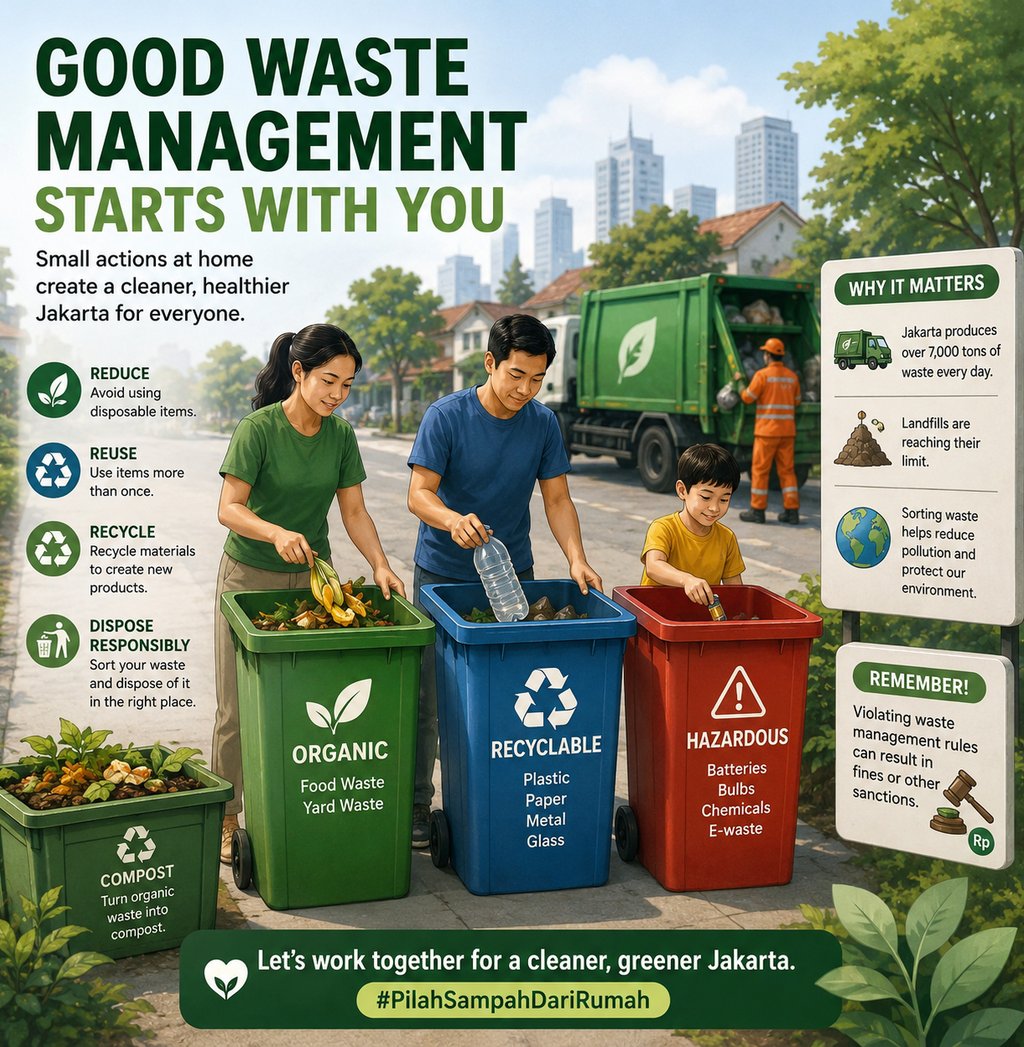
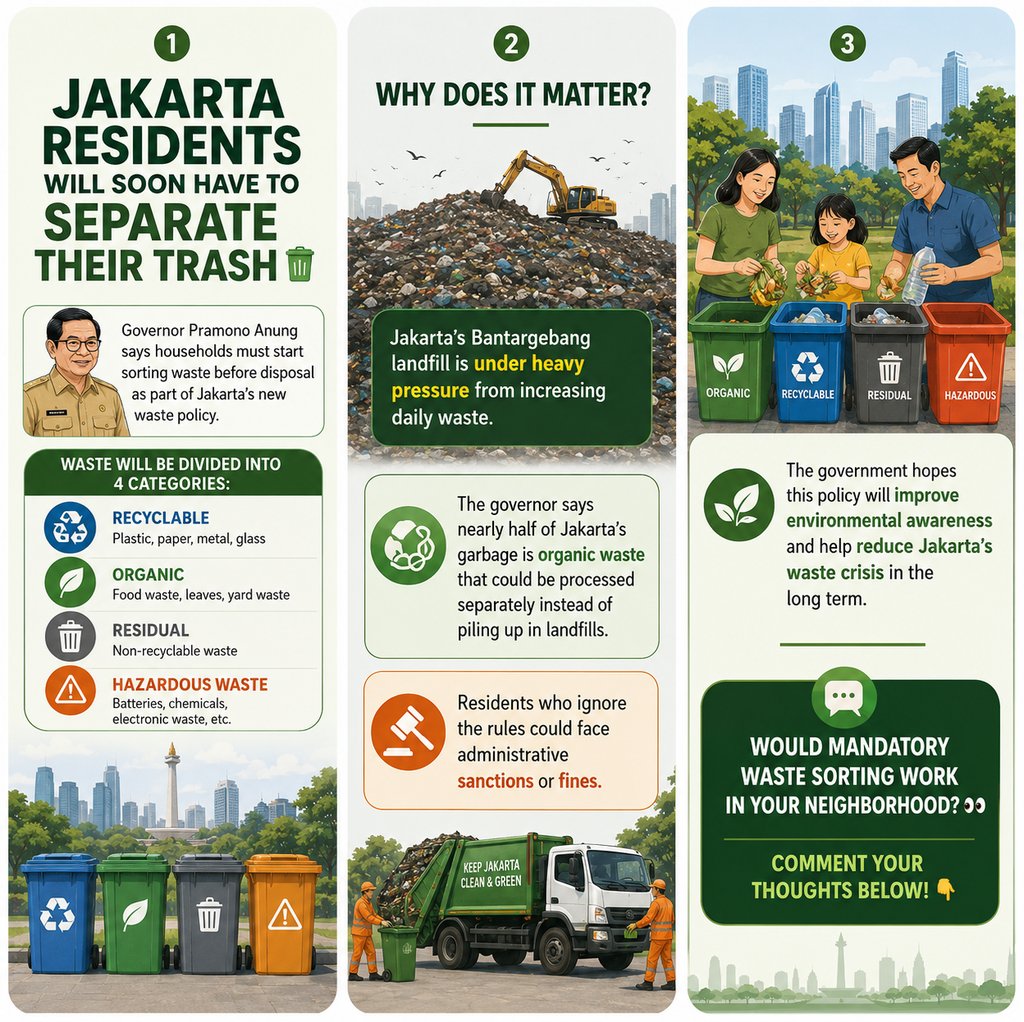
Jakarta is taking a major step toward improving its waste management system as the government plans to require residents to separate household garbage before disposal. The policy aims to reduce the growing pressure on Bantargebang landfill, which continues to receive massive amounts of daily waste from the capital. By dividing waste into recyclable, organic, residual, and hazardous categories, the city hopes to improve recycling efficiency, reduce environmental pollution, and encourage long-term public awareness about sustainable living. Officials believe that a large portion of Jakarta’s waste, particularly organic materials, can be processed separately instead of piling up in landfills. The initiative reflects a broader effort to create a cleaner, healthier, and more environmentally responsible Jakarta for future generations.
5/12/20263 min read
Introduction
Jakarta is Indonesia’s capital city and one of Southeast Asia’s largest urban centers, is currently facing a growing waste management crisis. Rapid urbanization, population growth, and increasing consumption patterns have significantly contributed to the city’s daily waste production. In response to mounting environmental concerns, Jakarta Governor Pramono Anung recently announced a policy initiative requiring residents to separate household waste before disposal.
The proposed regulation marks a major shift in Jakarta’s waste management strategy, emphasizing community participation and sustainable waste processing practices. This article examines the background of the policy, the current challenges faced by Jakarta’s waste system, the importance of waste segregation, and the potential long-term impact on environmental sustainability.
The Current Waste Situation in Jakarta
Jakarta produces thousands of tons of waste every day, much of which is transported to the Bantargebang Integrated Waste Processing Site (TPST Bantargebang) in Bekasi. As the primary landfill serving the capital, Bantargebang has operated under increasing pressure for years due to limited landfill space and continuously rising waste volumes.
One of the key issues identified by the government is the composition of household waste itself. A significant portion of Jakarta’s garbage consists of organic waste such as food scraps, leaves, and biodegradable materials. When mixed with recyclable and hazardous waste, these materials become difficult to process efficiently and accelerate landfill accumulation.
The dependency on landfill-based disposal systems has also created broader environmental concerns, including: a) Land degradation; b) Air pollution from methane emissions; c) Water contamination from leachate; d) Increased greenhouse gas emissions; and e) Public health risks for nearby communities
These conditions have intensified the need for more sustainable and systematic waste management policies.
The Proposed
Waste Segregation Policy
Under the new policy framework, residents will be encouraged — and eventually required — to separate household waste into four categories: a) Recyclable Waste: Materials such as plastic, paper, metal, and glass that can be processed and reused; b) Organic Waste: Food waste, garden waste, and biodegradable materials that can be composted or converted into organic fertilizer; c) Residual Waste: Non-recyclable waste that cannot be further processed; and d) Hazardous Waste: Items including batteries, chemicals, electronic waste, and other materials requiring special handling.
The government has also indicated that administrative sanctions or fines may be imposed on residents who fail to comply with the regulation once implemented fully.
Why Waste Segregation Matters
Waste segregation is considered one of the most effective first steps toward sustainable urban waste management. Separating waste at the household level allows governments and waste processing facilities to manage materials more efficiently and reduce unnecessary landfill dependency.
Environmental Benefits
Reduction of Landfill Burden
Proper segregation decreases the amount of mixed waste entering landfills, helping extend landfill lifespan and reduce operational pressure.
Increased Recycling Efficiency
Cleanly separated recyclable materials are easier and more economically viable to process.
Better Organic Waste Processing
Organic waste can be composted or transformed into renewable energy through biodigestion systems instead of producing methane emissions in landfills.
Lower Pollution Levels
Hazardous waste separated from regular garbage reduces soil and water contamination risks.
Challenges in Policy Implementation
While the proposed policy carries substantial environmental benefits, successful implementation will depend heavily on public participation and infrastructure readiness. Several challenges remain:
Public Awareness
Many residents may not yet fully understand how to separate waste correctly or why the process matters.
Infrastructure Limitations
Adequate waste collection systems, recycling facilities, and neighborhood-level sorting stations must be developed simultaneously.
Behavioral Change
Changing long-standing disposal habits requires consistent education campaigns and community involvement.
Monitoring and Enforcement
Clear regulations, monitoring systems, and fair enforcement mechanisms will be necessary to ensure compliance.
International Comparison
Several major cities around the world have successfully implemented mandatory waste segregation policies, including: a) Tokyo, Japan; b) Seoul, South Korea; c) Taipei, Taiwan; and d) Singapore.
These cities achieved high recycling rates through strict regulations, accessible infrastructure, and long-term public education programs. Jakarta’s proposed initiative reflects a broader global trend toward circular economy principles and sustainable urban living.
Long-Term Impact on Jakarta
If implemented effectively, Jakarta’s waste segregation policy could contribute to: a) Reduced landfill dependency; b) Improved urban cleanliness; c) Increased recycling rates; d) Lower greenhouse gas emissions; e) Greater environmental awareness among residents; and f) Development of a more sustainable waste management ecosystem.
More importantly, the initiative may help shift public perception of waste from being merely “garbage” into a resource that can be processed, reused, and managed responsibly.
Conclusion
Jakarta’s proposed household waste segregation policy represents an important step toward addressing the city’s growing environmental and waste management challenges. Although the transition may require significant public adaptation and infrastructural improvements, separating waste at the source has the potential to create long-term environmental, economic, and social benefits.
As urban populations continue to grow, sustainable waste management will become increasingly essential for maintaining public health, environmental quality, and overall urban resilience. Jakarta’s success will ultimately depend not only on government regulation, but also on active participation from its residents.
The future of a cleaner Jakarta may begin with a simple daily habit: separating waste before throwing it away.
Contact
Reach out for bespoke design and build services
© 2026. All rights reserved.


Studio:
Jl. Pisang Kepok IV No. 24, Kota Baru, Bekasi Barat, Kota Bekasi 17133 - Indonesia
Headquarter:
Plaza Summarecon Bekasi, Lvl. 7
Jln. Bulevar Ahmad Yani Kav. K01., Harapan Mulya, Medan Satria, Kota Bekasi 17142 - Indonesia
Phone Number:
+62 817 0101 388
+62 821 2255 5520
e-mail:
glmindonesia19@gmail.com